|
||||
|
|
Alex I Askaroff Alex has spent a lifetime in the sewing industry and is considered one of the foremost experts of pioneering machines and their inventors. He has written extensively for trade magazines, radio, television, books and publications world wide. Over the last 35 years Alex has been painstakingly building this website to encourage enthusiasts around around the Globe.
|
|||
|
THE PRINCESS OF WALES SEWING MACHINE
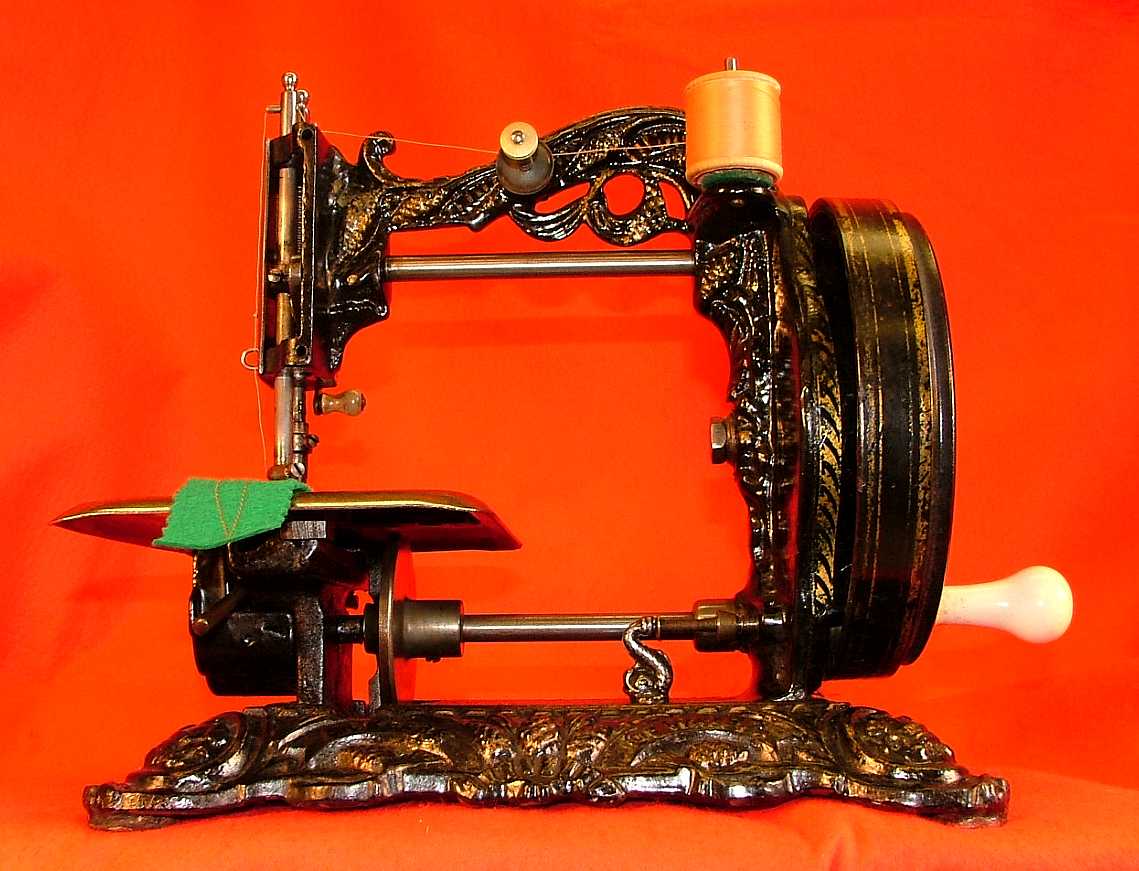
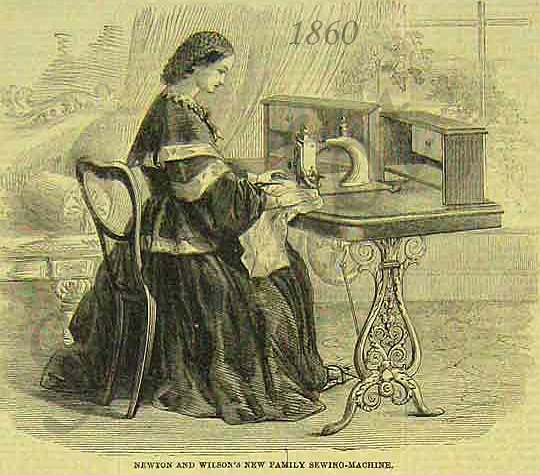
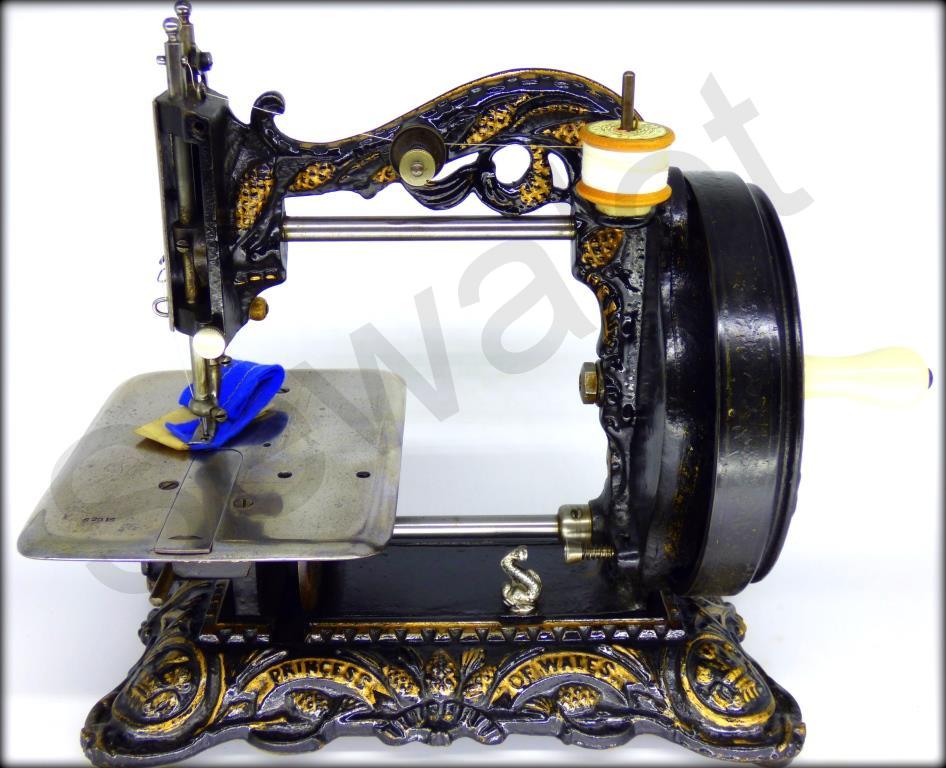
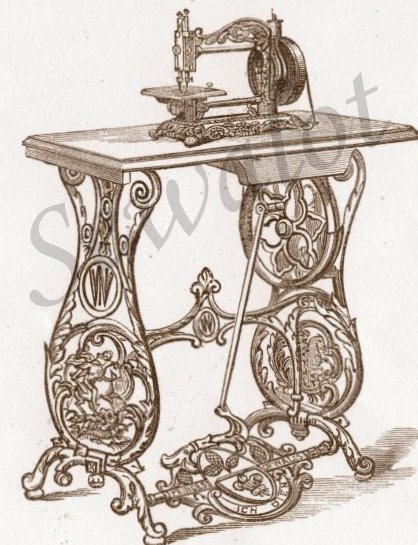
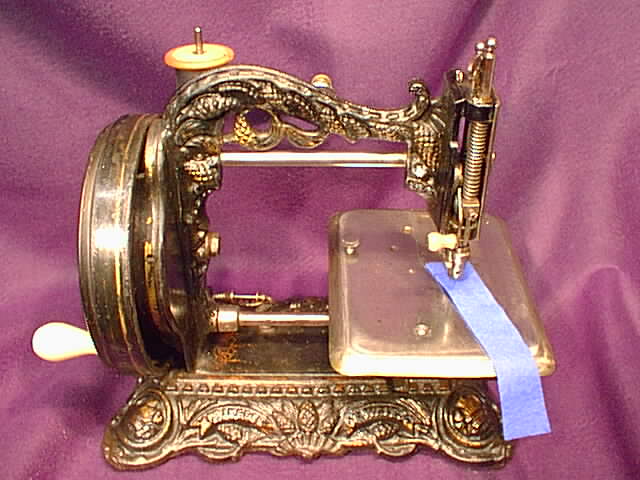
1873 The prize winning Princess of Wales. Claimed by periodicals of the day as the most perfect hand machine yet invented! One of the most beautifully ornate and decorative cast sewing machines of the Victorian Era was the Princess of Wales sewing machine made by Newton Wilson of England. Newton Wilson has been acclaimed as one of the main founders of the British sewing industry which is a bold statement but his fabulous Princess of Wales sewing machine certainly ticks all the boxes for collectors. The machine was made to look at home on a lady’s parlour table in Victorian England. Produced by the pioneer and genius William Newton Wilson.
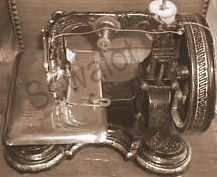
Can you see the little dolphin bobbin winder on the machine above? It was this attention to detail that made the Princess of Wales a sought after machine. However it was ten times more expensive than the James Weir machine of the same period! In the long run it was doomed to failure simply because it was too expensive. Priced out of the market as too expensive that Princess of Wales is still one of the most sought after machines of the Victorian period by collectors worldwide. An Early model Princess of Wales MKII sewing machine.
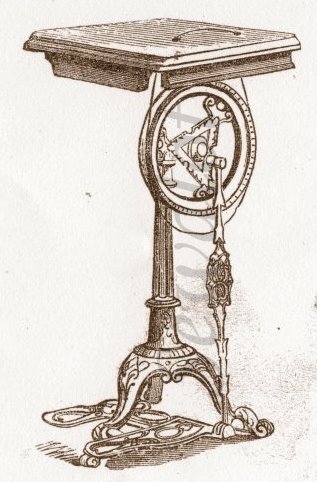
Newton Wilson’s trademark, the three feathers of the Black Prince, were later cast into the corner of each machine base. By 1857, Newton Wilson was selling sewing machines from 144 High Holborn, London. Like many of the early European sewing machine suppliers he imported from America. America was a decade ahead of the rest of the world in sewing machines.
Before the Trades Description Act was brought in, you could basically say what you liked about the goods that you sold. Newton Wilson was no exception, calling the Grover & Baker sewing machines that he supplied as his own. Unfortunately with personalities like Elias Howe and Isaac Singer suing everyone who even thought about making their own sewing machines, when Newton Wilson did make his own machines, he ended up in court. Legal proceedings plagued Newton Wilsons commercial life but it did lead to one very interesting find.
One day as Newton Wilson was sifting through the endless patents at the Patent Office when he stumbled upon the Thomas Saint sewing machine patent of 1790 that had been misfiled. The Thomas Saint Patent had vague similarities to the Elias Howe Patent in America being a machine for stitching leather, though it was a chain stitch machine. in 1874 Newton Wilson took the patent plans of Thomas Saint's and with a little modification actually made the machine stitch.
Had that patent shown up at the Singer-Howe court cases Elias Howe may have lost his claim to have invented the first sewing machine using his special needle. In fact if many details had turned up Elias would have lost. For example sometime before Elias Howe had patented his unique needle in America John Fisher had patented something similar in England. That would in turn have cost him the fortune that he made from sewing machines. Elias Howe became one of the richest men in the world and hardly made a sewing machine. His history is well worth a read.
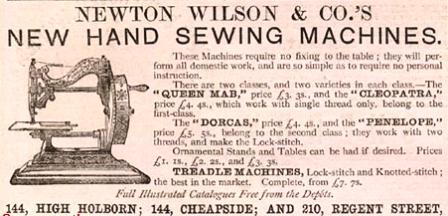
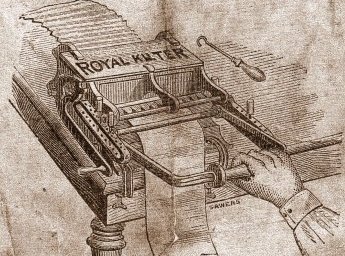
By 1867, Newton Wilson had set up his works at 52 Pope Street Manchester. The Princess of Wales sewing machine, Wilson’s most famous sewing machine, was initially forged at one of Wilson’s factories in Woolpack Lane, Nottingham along with some of the most sought after sewing machines in the world, including the Queen of Scots and the stunning Cleopatra. The Royal Kilter
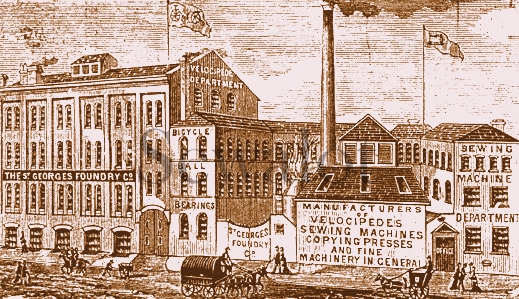
At the St Georges foundry they made bearings, bicycles or velocipedes, tools, presses and most importantly sewing machines.
To produce these fabulous machines Wilson brought together the greatest team ever assembled in the sewing machine world. They included James Starley who later produced the amazing Queen of Hearts sewing machine, the needle specialist A. J. Baylis, William Singer and William Hillman. They were all experts in their fields and several went on to form their own businesses.
Their experience was to come together to bring us some of the most stunning British machines we are ever likely to see. Each Princes of Wales sewing machine was hand built and unique, all parts being stamped with an individual number to identify it.
In 1873 The Princess of Wales,won the Grand Medal of Merit at the Vienna show in Austria. At the time, this machine was described as the most perfect hand machine yet invented. Newton Wilson later purchased superb showrooms in the heart of London at 210 Regent Street and 144 Cheapside, London. Newton Wilson was responsible for manufacturing these beauties…
The Princess of Wales £6.6s (three models plus Wilson rotary hook). The Princess of Wales Sewing Machine
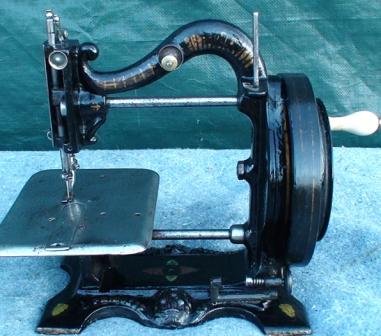
The Princess of Wales had two main versions from 1870, an early plain casting model MKII and the later spectacular one which we all know and drool over the MKIII. On each corner foot are the three feather of the Prince of Wales that Newton Wilson put on many of his machines and became his trademark.
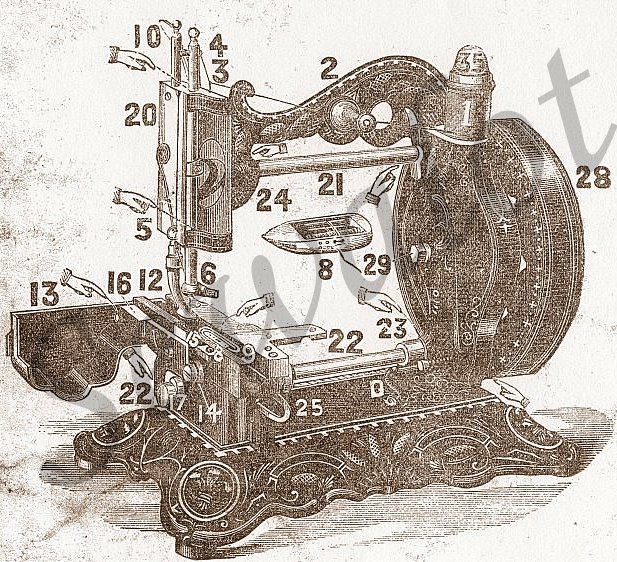
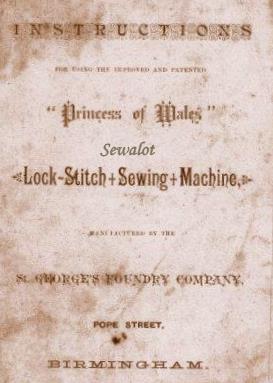
Princess of Wales instructions
|
||||
|
News Flash! All Alex's books are now on Amazon
If this isn't the perfect book it's
close to it!
Fancy a funny FREE read: Ena Wilf & The One-Armed Machinist Well that's it, I do hope you enjoyed my work. I have spent a lifetime collecting, researching and writing these pages and I love to hear from people so drop me a line and let me know what you thought: alexsussex@aol.com. Also if you have any information to add I would love to put it on my site.
|
||||
|
|
|
|||
CONTACT: alexsussex@aol.com Copyright ©
As a
new collector I have found your site
has increased my knowledge in
a short time to a degree
that I couldn't have
imagined. |
||||